Antimicrobial and Proximate Evaluative Studies of Persea americana (Mill.) Seeds
DOI:
https://doi.org/10.4314/Palabras clave:
Persea americana seeds, antimicrobial, proximate, GC-MS constituentsResumen
Background: The pulp of Persea americana (Mill.) fruit (avocado) has been reported to have several health benefits; however, the seed of the fruit is often discarded.
Objective: This study evaluated the proximate parameters of P. americana Mill. seeds, as well as the chemical constituents and antibacterial activity of its ethyl acetate seed extract, to elucidate the nutritional and medicinal potentials of the seeds.
Methods: Seeds from ripe avocado fruits were chopped into pieces, air-dried and pulverized into powder with the aid of a kitchen blender. Proximate analyses of the powdered seeds were carried out as described by Association of Official Analytical Chemists (AOAC), while the antimicrobial studies of the ethyl acetate seed extract were evaluated against clinical isolates (E. coli, S. aureus, P. aeruginosa, K. aerogenes, and B. subtilis) using agar-well diffusion and agar dilution methods. Chemical constituents of the ethyl acetate seed extract of the avocado seeds were elucidated using gas chromatography and mass spectroscopy technique (GC-MS).
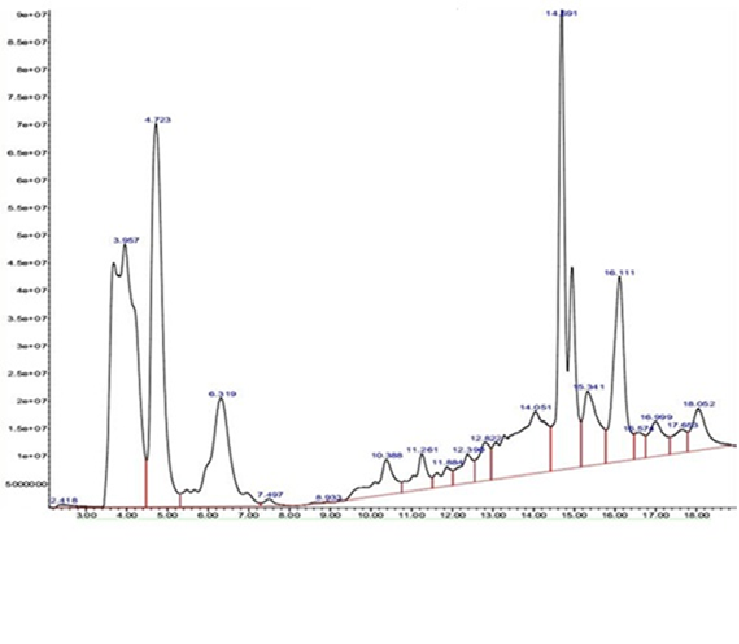
Results: Proximate analysis of 1.0 g of powdered seeds revealed the presence of carbohydrate (76.91% ± 0.2682), crude protein (1.82% ± 0.0727), fat (6.23% ± 0.2333), fibre (2.53% ± 0.3179), moisture content (9.46% ± 0.036) and ash value (2.98% ± 0.5198) The ethyl acetate seed extract was oily and dark brown with a yield of 5.36% w/w. Antimicrobial activity of the ethyl acetate extract against test microorganisms showed inhibition zone diameters ranging from 20 to 42 mm. at concentrations of 100-400 mg/mL of crude extract. Minimum inhibitory concentration range was 6.25-25 mg/mL of extract against test bacteria. GC-MS analysis of the ethyl acetate extract indicated the presence of 19 chemical components with ethanethioamide (23.54%), aziridine (16.21%), bicyclo-(3,1,1)-cis-vaccenic acid (15.51%) and propane nitrile (8.86%) as the most prominent known antimicrobial principles.
Conclusion: The study showed that the powdered seeds of P. americana has carbohydrates, crude fibre, protein and fat. The ethyl acetate extract possesses antimicrobial constituents, thus justifying the possible use of these seeds in food and medicine for the benefit of man
Referencias
Descargas
Publicado
Número
Sección
Licencia
Derechos de autor 2026 Nigerian Journal of Pharmaceutical Research

Esta obra está bajo una licencia internacional Creative Commons Atribución-NoComercial-SinDerivadas 4.0.
