Comparative Antibacterial Efficacy of Aqueous and Ethanolic Extracts of Acacia nilotica Fruit against Strains of Methicillin-Resistant Staphylococcus aureus (MRSA)
DOI:
https://doi.org/10.4314/Paraules clau:
Acacia nilotica, ethanol and aqueous extracts, Antibacterial activityResum
Background: Methicillin-resistant Staphylococcus aureus (MRSA) remains a formidable public health threat, with the World Health Organization recognizing it as a high-priority pathogen demanding urgent global attention.
Objectives: This study investigates the antimicrobial activity of ethanol and aqueous extracts of Acacia nilotica fruit, a plant traditionally used in Northern Nigeria for treatment of infections.
Methods: The antimicrobial efficacy of the extracts was evaluated against clinical isolates of methicillin-resistant Staphylococcus aureus (MRSA) and reference strains using the agar well diffusion method on Mueller-Hinton agar. Minimum inhibitory concentration (MIC) and minimum bactericidal concentration (MBC) values for susceptible strains were determined using the solid agar dilution method.
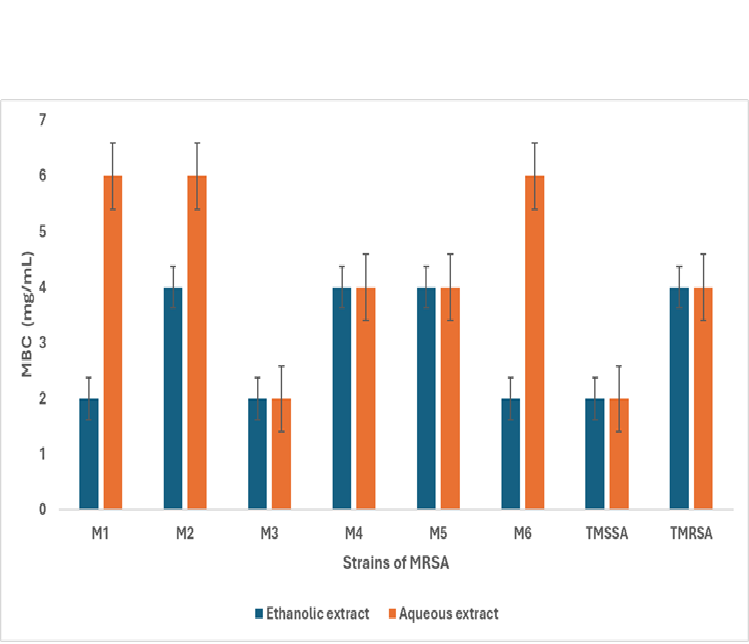
Results: Both extracts demonstrated concentration-dependent antimicrobial activity, with the ethanol extract exhibiting superior efficacy. All tested MRSA clinical isolates and the reference strain were susceptible to both ethanol and aqueous extracts, each producing appreciable zones of inhibition. The zones of inhibition for the ethanol extract ranged from 21.0 to 35.5 mm, while those for the aqueous extract ranged from 20.5 to 32.0 mm. MIC values ranged from 1–4 mg/mL for ethanol extracts and 2–4 mg/mL for aqueous extracts. MBC values ranged from 2–8 mg/mL for ethanol extracts and 4–8 mg/mL for aqueous extracts.
Conclusion: These findings suggest that Acacia nilotica fruit extracts, particularly the ethanol extract, possess significant antimicrobial potential and may serve as natural alternatives for managing MRSA infections. Further studies are warranted to isolate and characterize the active phytoconstituents, elucidate their mode of action, and evaluate their pharmaceutical potential in vivo.
Referències
Descàrregues
Publicat
Número
Secció
Llicència
Drets d'autor (c) 2026 Nigerian Journal of Pharmaceutical Research

Aquesta obra està sota una llicència internacional Creative Commons Reconeixement-NoComercial-SenseObraDerivada 4.0.
