Enhancement of Naproxen Solubility via Solid Dispersion Using Ipomoea Batatas Starch – Hydroxypropyl Methyl Cellulose Polymer Blends and Polysorbate 80
DOI:
https://doi.org/10.4314/Keywords:
Ipomoea batatas starch, solid dispersion, naproxen, HPMC, polysorbate 80Abstract
Background: Naproxen’s poor aqueous solubility limits its oral bioavailability, posing formulation challenges. This study aimed to improve its solubility by formulating a ternary solid dispersion (SD) using blends of Ipomoea batatas starch (PS) and hydroxypropyl methyl cellulose (HPMC), including polysorbate 80 as surfactant.
Materials and Methods: The flow property of PS was assessed by Carr's index (CI) and Hausner’s ratio (HR). Naproxen SD was prepared via solvent evaporation using varying drug/polymer ratios. The SD with the highest aqueous solubility was characterised by scanning electron microscopy (SEM), differential scanning calorimetry (DSC) and Fourier-transform infrared spectroscopy (FTIR). Tablets of both optimum SD (T6) and pure naproxen (TN) were prepared by direct compression and assessed for friability, hardness, dissolution and weight uniformity.
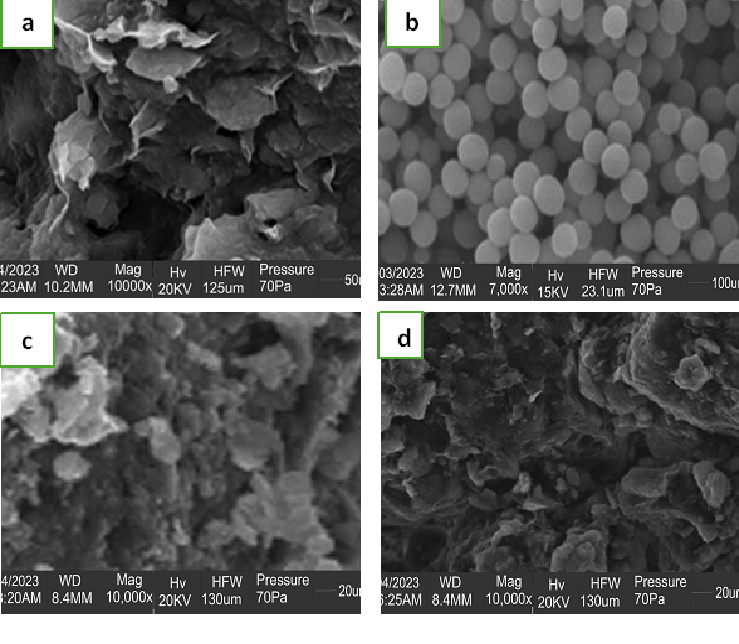
Results: Potato starch had a Hausner’s ratio of 1.17 ± 0.01, indicating good flow. The highest aqueous solubility was observed for a drug/polymer ratio of 1:4, with the PS/HPMC ratio being 1:3 (S6). Polysorbate 80 increased solubility by up to four times. SEM micrographs of the SD showed no trace of naproxen, suggesting a loss of the drug's crystalline structure, while DSC confirmed decreased crystallinity. FTIR spectra showed that the structure of naproxen was not altered by the solid dispersion. The optimal SD tablets met acceptable standards. The T50 drug release time was 9 minutes, compared to 29 minutes for TN. There was synergism between PS and HPMC in enhancing naproxen solubility, which was further improved by the addition of polysorbate 80.
Conclusion: Naproxen's solubility in solid dispersion improved due to polymer blending and was further improved by the addition of polysorbate 80 as a surfactant.
References
Downloads
Published
Issue
Section
License
Copyright (c) 2026 Nigerian Journal of Pharmaceutical Research

This work is licensed under a Creative Commons Attribution-NonCommercial-NoDerivatives 4.0 International License.
